
By James Eliot, Markets & Finance Editor
Last updated: May 23, 2026
SpaceX’s Starship v3 Launch: How It Challenges Aerospace Funding Trends
In less than two years, SpaceX has slashed its launch costs by nearly 25%, a statistic that is not only remarkable but poised to reshape the commercial aerospace landscape. The recent successful launch of Starship v3 stands as a testament to SpaceX’s radical departure from traditional aerospace paradigms, effectively challenging how private aerospace ventures will attract investment. With an estimated $3 billion invested in the Starship v3 project alone, SpaceX is firmly committing to high-risk and high-reward strategies that contrast starkly with the cautious approaches typically favored by venture capitalists in the aerospace sector.
While many analysts hail this launch primarily as a technological triumph, the implications of such rapid development cycles may be far more disruptive to conventional venture capital strategies within aerospace than is generally discussed.
What Is Starship v3?
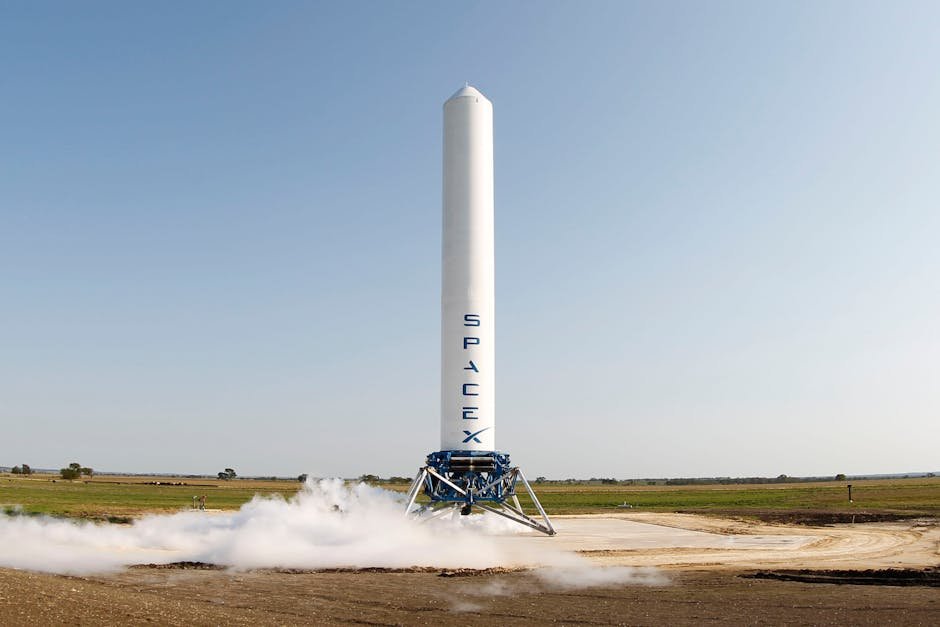
Starship v3 is the latest iteration of SpaceX’s giant spacecraft designed for a range of missions — from satellite deployment to human spaceflight. With its reusable design, Starship aims to drastically reduce the cost per flight to under $2 million, according to NASA estimates. The implications are enormous for both commercial space travel and venture capital, emphasizing the need for investors to pivot in response to these developments.
For investors and stakeholders in the aerospace industry, grasping the significance of this innovation is essential amid rapid changes that can redefine market dynamics. Think of Starship as the Tesla of rockets; just as Tesla revolutionized electric vehicles, Starship is redefining expectations for launch capabilities and costs.
How Starship v3 Works in Practice
Several notable use cases demonstrate Starship v3’s potential impact:
-
NASA Artemis Program: SpaceX was awarded contracts worth over $3 billion as part of NASA’s Artemis missions. The Starship design will not only ferry astronauts to the Moon but also serve as a vital component in their quest for Mars exploration. This partnership underscores SpaceX’s dominance in securing lucrative government contracts.
-
Satellite Deployment: In 2022, SpaceX launched a record-breaking 61 missions, according to SpaceNews. Among these was the deployment of thousands of satellites under the Starlink program, which aims to provide global broadband internet access. Each launch represented a cost efficiency that traditional providers struggle to achieve.
-
Commercial Payload Transport: SpaceX’s Falcon Heavy, often overshadowed by Starship, has already facilitated the delivery of heavy payloads for various clients, including the U.S. Department of Defense. These missions have highlighted the increased capacity and reduced costs associated with SpaceX’s launch vehicles. Starship is designed to enhance these capabilities further by launching massive satellites or assembling equipment in orbit.
-
Interplanetary Travel: Elon Musk has stated that the successful launch of Starship v3 pushes the boundaries of what’s possible in commercial space. This capability will not only facilitate missions to Mars but also beckons a future where space tourism could become a reality, fundamentally altering the aerospace landscape.
Top Tools and Solutions
In an industry poised for rapid expansion, having the right solutions is crucial for success. Here are some key tools:
- Marketing Blocks — An AI-powered marketing content creation platform designed for marketers looking to streamline content production.
- Marketing Boost — Provides done-for-you vacation incentives and marketing tools to boost sales conversions and customer loyalty.
- Morphy Mail — A powerful cold email delivery platform for sending to cold or purchased lists without spam filters.
- AWeber — Professional email marketing and automation platform with AI-powered email writing.
- Smartlead — Connect unlimited mailboxes with auto warm-up and run outreach via email, SMS, WhatsApp, and Twitter.
- BlackboxAI — An AI coding assistant and developer tool for enhancing productivity in software development.
Common Mistakes and What to Avoid
Investing in aerospace technology, especially in ventures surrounding high-risk projects like Starship, carries significant pitfalls. Here are critical mistakes to avoid:
-
Underestimating Development Costs: Blue Origin, for instance, has frequently faced criticism for its escalating costs. High-profile setbacks have raised eyebrows regarding their long-term viability. Failing to account for developmental variances can lead to catastrophic budget overruns.
-
Ignoring Market Dynamics: Companies that have focused solely on traditional launch methods, such as the now-defunct Arianespace, often found themselves at a disadvantage. SpaceX’s aggressive pricing and rapid launch cycles taught the market that stagnation equates to obsolescence.
-
Neglecting Iterative Development: SpaceX’s approach emphasizes iterative design and rapid testing cycles, which has been key to its success. Competitors relying more on the waterfall development method, such as Northrop Grumman, may lag significantly behind, with less flexibility in adaption to innovation.
Where This Is Heading
As the aerospace industry aims for a scorching $1 trillion valuation by 2030 (growth projected at 4.3% annually), investors must keep a keen eye on emerging trends.
-
Emergence of Low-Cost Launches: Analysts at Goldman Sachs predict that further advancements in reusable rocket technology will continue to ramp up the efficiency and reduce the costs of space travel, making it accessible for a broader array of aims, from research to entertainment.
-
Increased Commercial Partnerships: With NASA and SpaceX setting the precedent for public-private partnerships, expect more companies to form strategic alliances that blur the lines between governmental objectives and commercial interests.
-
Acceleration of Space Tourism: Companies like SpaceX and Virgin Galactic will lead the way toward making space tourism a reality. Predictions suggest that by 2025, the market for space tourism could reach several billion dollars, driven in part by increasing technological feasibility led by initiatives like Starship.
FAQ
Q: What is SpaceX’s Starship v3?
A: SpaceX’s Starship v3 is a new spacecraft designed for a variety of missions, including satellite deployment and human spaceflight. It represents a significant advancement in reusable rocket technology, aimed at reducing launch costs.
Q: How does Starship v3 work?
A: Starship v3 utilizes a reusable design that allows for more efficient launches at much lower costs. Its innovative engineering enables it to transport payloads and astronauts into space, contributing to missions like NASA’s Artemis.
Q: How does Starship v3 compare to traditional rockets?
A: Unlike traditional rockets, which often require substantial investment for every launch, Starship v3’s reusability can drastically lower costs and increase launch frequency, making space more accessible.
Q: What are the costs associated with launching SpaceX rockets?
A: The launch cost for Starship v3 is projected to be under $2 million per flight. This is substantially lower compared to many traditional launch methods, which can run into tens of millions for a single mission.
Q: What could be the future of space travel with SpaceX’s technology?
A: The advancement of technologies like Starship v3 could lead to a boom in both commercial space travel and tourism, fundamentally altering the economic landscape of the aerospace sector by the late 2020s.
Q: What is a common mistake investors make in aerospace?
A: A common mistake is underestimating the development costs associated with high-risk projects like SpaceX’s Starship. Failure to foresee budget overruns can jeopardize investment.
Q: How will partnerships shape the future of aerospace?
A: Increasing public-private partnerships, exemplified by collaborations between NASA and SpaceX, are likely to spur innovation and efficiency, allowing for shared risks and resources in achieving ambitious aerospace goals.
Q: What tools can help with aerospace investments?
A: Tools like Marketing Blocks and Morphy Mail are valuable resources for marketing and outreach, crucial for those investing in aerospace ventures.